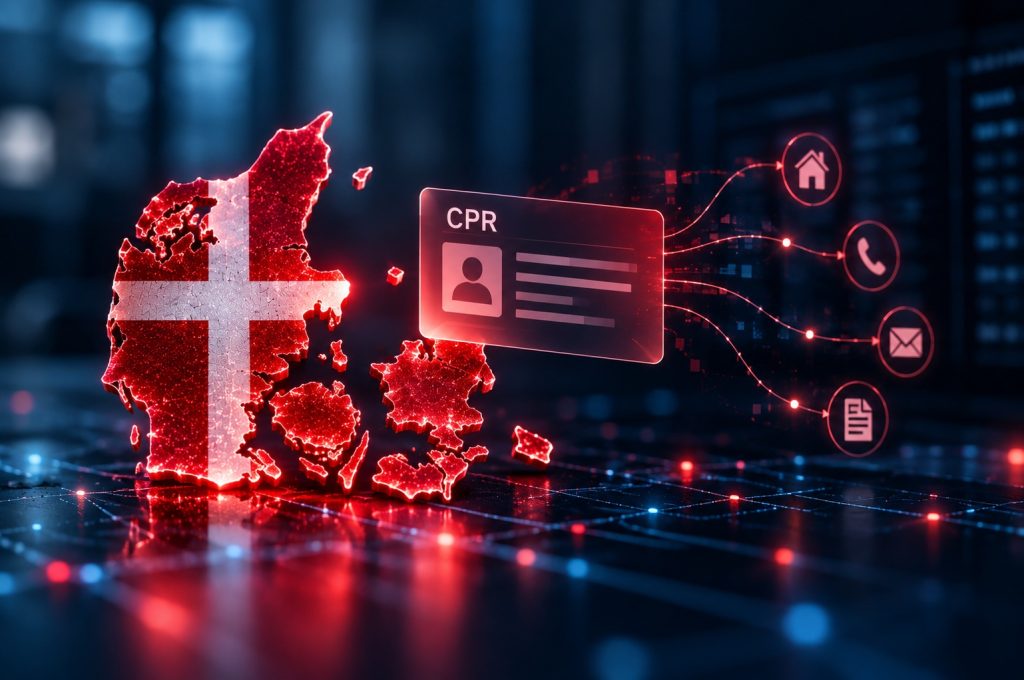
Approximately 8.8 million CPR records have been accessed in one of Denmark’s most significant recent data security incidents.
According to the Danish CPR Administration, unauthorized parties misused a private Danish company’s legitimate access to the CPR system to obtain names, addresses, CPR numbers and other information relating to approximately 8.8 million registered individuals. The company’s access has since been terminated, and the incident has been reported to the Danish Data Protection Agency and is under investigation by the police and relevant authorities.
The Danish Data Protection Agency states that a very large number of automated lookups were made against the CPR system with the purpose of identifying valid CPR numbers. The authority is investigating what happened, how it was possible, and who is responsible for the processing of personal data involved in the case.
For organizations, however, the incident raises a question that extends beyond how the initial access occurred:
What happens when personal information is already exposed?
When Personal Information Becomes a Security Risk
There is currently no public evidence establishing how the accessed information will be used.
But information such as names, addresses and CPR numbers can potentially make attempts to impersonate individuals more convincing. Someone contacting an employee, customer service department or another part of an organization may appear more credible when they already know information normally associated with the person they claim to be.
That makes it important to reconsider the level of trust placed in personal information.
Knowing someone’s CPR number, name or address does not necessarily prove that the person providing the information is actually that individual.
Look at What You Accept as Proof of Identity
For organizations, one practical consequence is therefore to review how identity is verified before access, information or assistance is provided.
Following the incident, the Danish Agency for Societal Security has advised authorities, organizations and businesses to supplement their identity verification procedures. In particular, information such as CPR numbers, names and addresses should not be relied upon alone when confirming someone’s identity in situations involving sensitive information or potential financial consequences.
Additional verification methods can include MitID, one-time codes sent to previously registered contact details, relationship-specific verification questions or callbacks to previously registered phone numbers.
This is particularly relevant for employees working in functions where identity verification plays a role, such as IT support, customer service and finance. A request containing accurate personal information can still be fraudulent.
The same principle applies to phishing and social engineering. The more accurate information someone has about a person, the easier it may be to construct communication that appears legitimate.
When a Convincing Message Gets Through
Exposed personal information makes phishing and social engineering more convincing. Even with strong verification procedures and well-trained employees, some attempts will eventually succeed. Someone opens an attachment, clicks a link or downloads a file that looks legitimate.
What happens next often depends on the state of the device.
Many attacks rely on known vulnerabilities in commonly used software, such as browsers, PDF readers, office applications and other third-party tools, to turn a single click into something more serious. An outdated application can allow malicious code to run, give an attacker a foothold on the endpoint, or provide a way to gain higher privileges and move further into the network.
When those known vulnerabilities have been patched, the attack has fewer places to go. A successful phishing attempt does not automatically become a compromised device, and a compromised device does not automatically become a compromised organization.
This is why visibility into the applications installed across endpoints matters. IT teams need to know where vulnerable, insecure and end-of-life software exists so they can remediate it before it becomes the next step in an attack.
Turn Visibility Into Remediation
SecTeer VulnDetect combines vulnerability scanning and patch management to help IT teams identify installed applications, pinpoint vulnerable software and prioritize remediation according to risk exposure. VulnDetect can also deploy pre-configured patches for supported applications, allowing identified vulnerabilities to move from detection towards remediation.
This matters because security is rarely about a single control.
Strong identity verification makes impersonation harder. Awareness helps employees spot suspicious requests. Patch management limits what an attacker can do if one gets through.
The CPR incident is a clear reminder that organizations do not control every source of cyber risk.
But when information is already exposed, organizations can still control how difficult the next step becomes.
Want better visibility into vulnerable applications across your endpoints? See how SecTeer VulnDetect can help your team identify vulnerable software, prioritize remediation and deploy updates where needed.