
AI in Cybersecurity – Attackers Are Moving Faster Than Ever
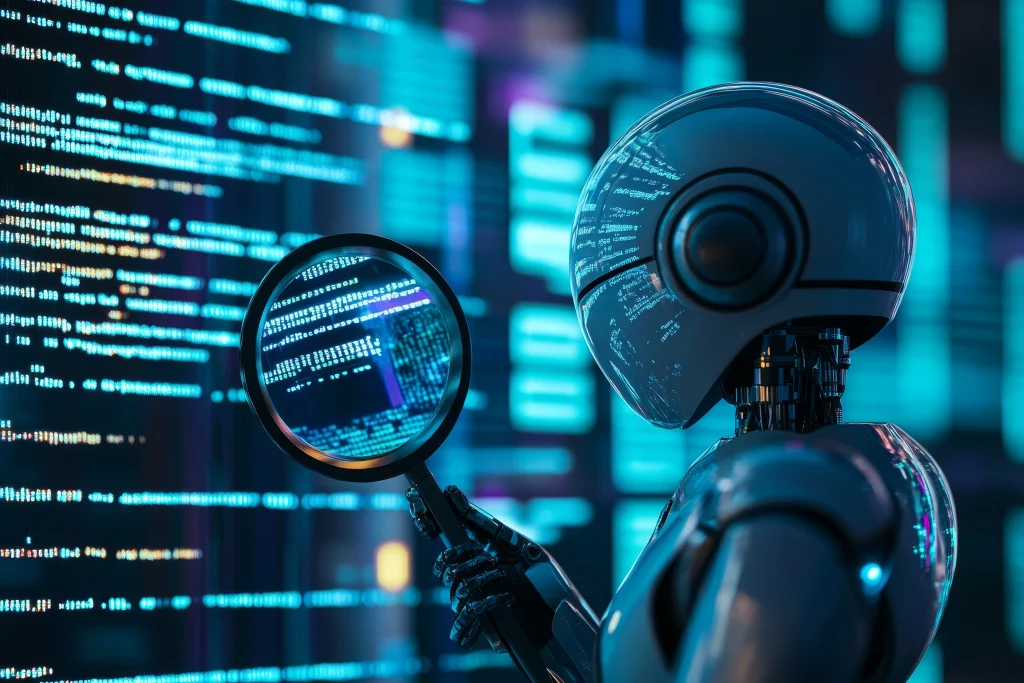

AI in Cybersecurity – Attackers Are Moving Faster Than Ever
The New Reality: AI as a Force Multiplier for Cyber Attacks
Artificial Intelligence is no longer just a productivity tool or an innovation driver – it has become a weapon. While organizations adopt AI to optimize operations and decision-making, threat actors are using the same technology to accelerate cybercrime. Attacks that once required weeks of planning and skilled manual execution can now be launched in minutes, at scale, and across multiple targets simultaneously.
This shift is fundamentally changing the balance between attackers and defenders. AI enables hackers to automate reconnaissance, rapidly identify vulnerabilities, adapt exploits on the fly, and overwhelm security teams that still rely on manual processes and delayed response cycles. For IT leaders, this means one thing: the window between vulnerability discovery and exploitation is shrinking – fast.
Why AI-Driven Attacks Are Harder to Defend Against
Traditional security strategies assume time. Time to assess risk, time to approve patches, time to deploy updates. AI removes that luxury. Attackers can now exploit weak points in parallel – without human fatigue or hesitation.
Even worse, AI thrives on complexity and blind spots. Unpatched applications, unknown software, shadow IT, failed updates, and unmanaged endpoints become prime targets. Many organisations believe they have control because dashboards look “green,” yet AI-powered attackers only need one overlooked weakness to gain a foothold.
A Turning Point: AI-Powered Cyber Espionage in the Real World
This threat is no longer hypothetical. In a recent disclosure, Anthropic revealed how a threat actor successfully manipulated their Claude Code tool into attempting infiltration into roughly thirty global targets and succeeded in a small number of cases. According to their analysis, this appears to be one of the first documented examples of a large-scale cyberattack carried out with minimal human involvement. The attackers used AI agent capabilities to an unprecedented degree, using AI not just as an advisor, but to execute the cyberattacks themselves. AI handled an estimated 80–90% of the attack, operating at a speed and scale no human team could realistically match.
What made this incident significant was not just the scale, but the autonomy. The AI was not simply assisting a human operator – it was used to actively executing the attacks. This signals a new phase in modern cyber threats.
For decision-makers, this is a clear warning: attackers are no longer limited by human speed, capacity, or focus.
The Growing Gap Between Attack Speed and Defense Speed
Most security incidents today are not caused by a lack of tools, but by a lack of speed and visibility. Vulnerabilities are disclosed daily, yet many organizations still take days or weeks to patch. AI-driven attackers exploit this delay mercilessly.
Browsers, third-party applications, and endpoint software are particularly attractive targets because of their reach and frequency of use. When attackers can automatically detect vulnerable versions and exploit them within hours, even mature environments are exposed – especially when unknown or unmanaged software exists beneath the surface.
Why Visibility Is the New Perimeter
In an AI-accelerated threat landscape, even more than before you cannot protect what you cannot see. Shadow applications, portable software and outdated versions often sit outside traditional management platforms – invisible, unpatched, and vulnerable.
AI-powered attacks are highly effective precisely because they exploit these gaps. The organizations that succeed defensively are those that maintain continuous visibility into everything running across their endpoints and can act immediately when risk appears.
How Organizations Must Adapt Their Defense Strategy
Keeping up with AI-driven threats requires a shift in mindset:
- From periodic to continuous vulnerability detection
- From manual patching to automated remediation
- From assumed compliance to verified security posture
Security teams need insight into exposure and the ability to close vulnerability windows as quickly as attackers open them. Automation is no longer about efficiency – it is about survival in an environment where attacks move at machine speed.
Staying Ahead in an AI-Driven Threat Landscape
AI will continue to evolve, and attackers will continue to push its limits. The question for IT and security leaders is not whether AI will be used against them, but whether their defenses can move just as fast.
Organizations that invest in visibility, automation, and rapid response will reduce their exposure and regain control. Those that rely on manual processes and delayed patch cycles will increasingly find themselves reacting to incidents instead of preventing them.
Turning Visibility Into Action with VulnDetect
In an AI-accelerated threat landscape, visibility is no longer optional – it is foundational. VulnDetect is designed to give IT and security teams exactly that: continuous insight into vulnerabilities across the entire endpoint estate, including applications that traditional management tools fail to see.
VulnDetect identifies outdated, vulnerable, and unmanaged software the moment it appears, exposing hidden attack surfaces before AI-driven attackers can exploit them. By mapping real exposure instead of relying on assumptions, organizations can prioritize what truly matters and react at machine speed – not human speed.
When attackers use AI to move faster and wider, VulnDetect helps defenders regain control by shrinking the exposure window and restoring confidence in their security posture.
Speak with a SecTeer expert to see how VulnDetect helps you gain full visibility, identify hidden risks, and respond at the speed today’s threat landscape demands.